Bingo Drive: Fun Bingo Games
- 4.6
- Rating
- 1.00M
- Installs
- Free
- Price
 Analysis by App-foxy
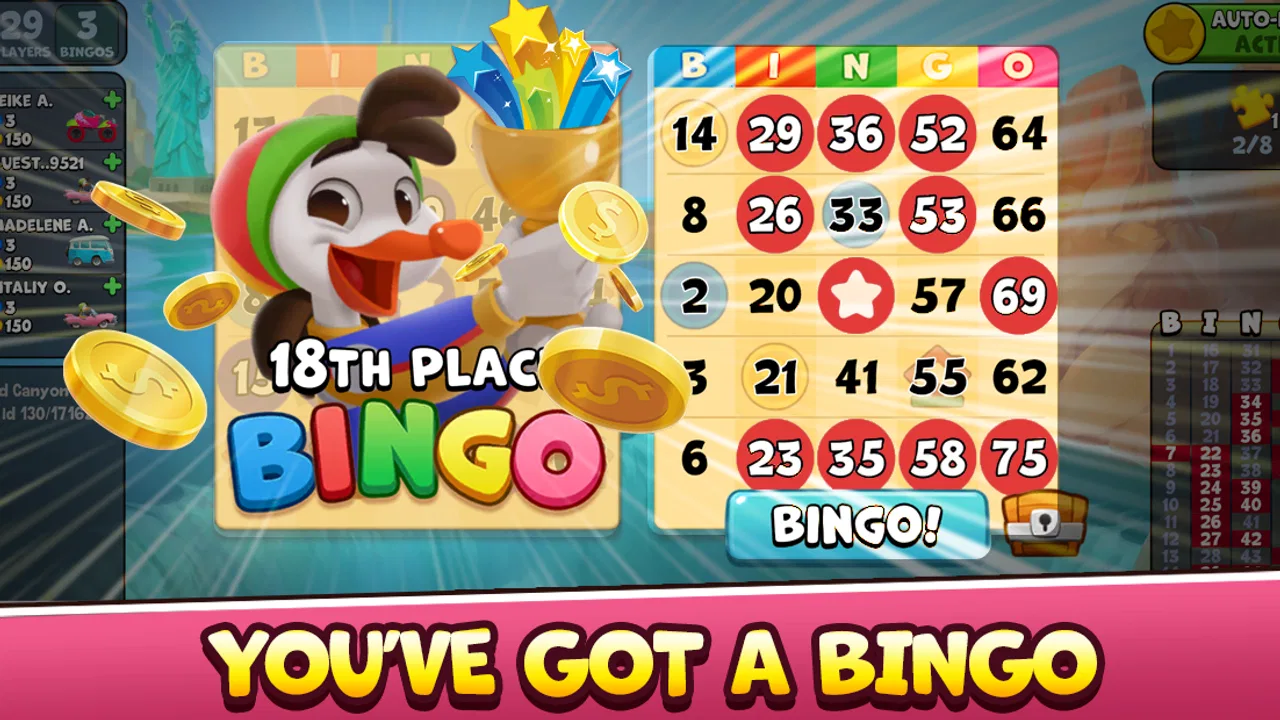
I approached Bingo Drive: Fun Bingo Games as a quick-play board game rather than a traditional paper bingo replacement. Its appeal is easy to understand: you can drop into a lively round, watch the board develop, and keep making small decisions without needing a long tutorial. After spending time with it, I found the strongest part is the rhythm. A round can feel casual when I have only a few minutes, but the changing pace gives it enough tension to keep me interested longer.
That convenience comes with an important qualification. This is a free game from Gliding Deer, supported by optional in-app purchases ranging from $0.99 to $399.99 per item. I would happily recommend trying it without spending, but I would also advise setting a personal limit before getting deeply involved. The game is best enjoyed as a light, repeatable pastime, not as something that should pressure you into buying progress or extra resources.
How Bingo Drive feels during everyday play
When I play Bingo Drive in an ordinary spare moment, I pay attention to how quickly the round draws me in and whether I can leave it without feeling pulled into one more. That balance is useful to judge before deciding whether it belongs in a daily routine. I also find that choosing a moment when I can focus makes the game’s brisk pace easier to enjoy.
You May Also Like

 Blood Strike: 2.5 Anniversary
Blood Strike’s Loadouts Turn Every Drop Into a Tactical Gamble
A close look at Blood Strike’s custom loadouts: how fast access to signature weapons reshapes its battle royale rhythm, rewards preparation, and narrows the gap between fights.

 Pandora - Music & Podcasts
Pandora’s Music Is Easy to Start, but Harder to Recover
Pandora’s strength is its low-effort path from a seed to a station. Its weak spot is how much confidence it asks you to place in connection, setup, and quiet recovery.

 8 Ball Pool
 Is Built on Rivalries, Rematches, and Routine
A close look at the rivalries, rematches, shared routines, and unanswered safety questions that turn a quick pool match into a persistent mobile community.

 Samsung Music
’s Quiet Strength Is Playing What You Already Own
Its reach comes less from spectacle than from dependable access to a personal library. That simplicity is both the app’s strongest retention engine and its ceiling.

 AccuWeather: Weather Radar
AccuWeather Review: A Quick, Clear Forecast for Everyday Decisions
For everyday plans, the best forecast is the one you can understand quickly. AccuWeather makes rain timing, radar, and local conditions easy to act on, with a few trade-offs.

 Hill Climb Racing
Why Hill Climb Racing Still Turns Crashes Into One More Run
A tiny car, a bumpy hill and one more upgrade: Hill Climb Racing keeps resurfacing because its simple chaos makes every near-miss feel personal.
More From Our News Desk



A fast start, with a little room for adjustment
The first thing I noticed is how naturally the game fits short sessions. I can open it when waiting for an appointment, play during a quiet break, or use it to unwind at the end of the day. The board-game format is familiar enough that I do not need to learn a complicated control scheme. The main challenge is paying attention to the developing board and acting at the right moment.
That makes it different from a slow, physical bingo night. With paper cards, the atmosphere depends on other people and the caller. Here, the experience is more immediate and game-like. I am not simply marking numbers; I am following a moving sequence and trying to make sensible choices before the opportunity passes. The result feels closer to an arcade-flavored bingo session than a quiet tabletop activity.
For a new player, my advice is to begin with short sessions and learn the pace before worrying about efficiency. It is tempting to tap quickly and treat every round as a reflex test, but I found that a calmer approach helps me understand what is happening. Once the rhythm becomes familiar, the game feels much less demanding.
What happens when the action gets busy
The heavier moments arrive when several things compete for my attention at once: the board changes, a reward or event appears, and I am trying to decide whether to continue or move on. These moments are where the game earns its “drive” feeling. They are also where a small screen can become less comfortable, especially if I am playing while distracted.
I would not describe the experience as mentally exhausting, but it rewards focused play more than background play. If I am watching television or answering messages, I am more likely to miss a useful moment. That is a practical trade-off: the game is easy to start, yet the most satisfying rounds ask me to stay engaged.
A useful habit is to treat each session as a contained activity. I play a few rounds, check whether I am still enjoying the decisions, and stop before the loop becomes automatic. This is particularly helpful in a free-to-play game, where repeated play can make optional purchases feel more tempting than they did at the beginning.
Speed and responsiveness in practical use
My impression is that the game is designed around brisk transitions rather than long stretches of waiting. That matters because bingo loses much of its charm when every action feels delayed. The presentation keeps the focus on the next useful moment, so the game works well when I want something more active than a puzzle but less demanding than a full strategy game.
Perceived speed is not only about how quickly a screen opens. It is also about whether I understand what the game expects from me. Bingo Drive benefits from a straightforward loop: I can see the board, follow the round, and continue without constantly searching through menus. That clarity makes it feel faster than a more feature-heavy board game, even when both require similar attention.
Still, the experience depends on the phone and the surrounding conditions. I would not promise identical smoothness on every device, and I would avoid judging it from one unusually slow session caused by a busy connection or an older handset. What I can say is that its short-round structure makes occasional friction less frustrating than it would be in a long strategy match.
Stability, interruptions, and getting back into a session
Reliability matters more here than it might seem. A bingo round has momentum, so an interruption at the wrong point can be more annoying than a delayed menu. In normal use, I found the game easiest to enjoy when I gave it a stable moment of attention instead of switching rapidly between apps.
If a phone call, notification, or system interruption pulls me away, I prefer to pause mentally and check the game carefully when I return rather than tapping immediately. That small habit helps avoid accidental choices and gives the session a chance to settle. It is also sensible for any game where a round can move forward while I am not fully focused.
I would call recovery manageable rather than something to ignore. The game is suited to returning for another short session, but I would not use it as my choice for an activity where losing a long, carefully built run would be unacceptable. Players who need guaranteed continuity should favor a simpler offline board experience instead.
How demanding is it on a phone?
The game is available for devices running Android 7.0 or later, which gives it a broad reach across older and newer phones. That does not mean every device will feel identical. A newer phone may handle busy visual moments more comfortably, while an older model may make the experience feel less immediate when other apps are active.
For the best everyday experience, I would close demanding background apps, keep enough free storage for normal system operation, and avoid playing with a nearly empty battery. These are not special requirements for this title; they are practical ways to reduce avoidable stutter or interruptions on mobile devices. I also prefer a steady connection when the game is behaving like a live service, because an unstable connection can make any interactive round feel less reliable.
Resource use is another reason I would not leave it running unnecessarily. Short sessions do not feel like a problem in my routine, but extended play can make any animated mobile game more noticeable in terms of battery and heat. If the phone becomes warm, I take a break rather than lowering my standards and continuing until the device is uncomfortable.
Learning the loop without wasting opportunities
One of the less obvious skills is learning when not to rush. The visual energy encourages quick reactions, but speed alone is not the same as good play. I get better results when I first identify the important part of the board, then act, rather than tapping at every new element automatically.
I also recommend separating experimentation from serious progress. Early rounds are the right time to understand how the game presents choices and rewards. Once I know the rhythm, I can decide whether I want a relaxed session or a more focused attempt. Mixing those goals can make the game feel inconsistent, when the real issue is that I am changing my style from one round to the next.
Another useful trade-off is deciding how much of the surrounding progression I actually care about. If I only want a quick bingo game, I can focus on the round itself. If I enjoy collecting and advancing, I may spend more time with the broader loop. The first approach is less demanding; the second gives the game more staying power but also makes the optional purchase structure more visible.
Who will enjoy it most?
I think Bingo Drive is a strong fit for people who like familiar board-game rules presented with a livelier mobile pace. It suits players who want short bursts of activity, colorful momentum, and a reason to return without committing to a long match. Beginners can understand the basic idea quickly, while regular players can refine their timing and decide how deeply they want to engage with progression.
It is also a reasonable choice for someone who finds traditional bingo too passive. The game adds more urgency and interaction, so I am not simply waiting for numbers to be called. That extra energy makes it more suitable for solo phone play, especially when I want something casual but not completely mindless.
The broad audience is reflected in its Everyone content rating. I would still encourage parents to explain that free games may present optional purchases, particularly if a child is using a device with payment access. The rating describes the intended age suitability, but it does not remove the need for sensible spending controls.
Who should choose something else?
I would skip this game if my main goal were a quiet, completely offline bingo experience with no purchase prompts or progression pressure. A physical set, a simple offline app, or a slower board title may be better for that purpose. Bingo Drive is built around repeat engagement, so its energy may feel excessive to someone who only wants a calm number-calling simulation.
I would also be cautious if I am sensitive to variable spending in free-to-play games. The free entry is useful, but the available purchase range is wide enough that I would not play casually with unrestricted payment access. My preferred setup is to try the core loop first, decide whether it genuinely adds value to my day, and only then consider whether any optional purchase is worthwhile.
How it compares with ordinary board-game alternatives
Compared with physical bingo, this game wins on convenience. I do not need cards, markers, a caller, or a group of people in the same room. It gives me a more immediate solo activity and takes advantage of the phone format. The cost of entry is also simple: the game itself is free to start.
Compared with a basic digital bingo app, it feels more focused on momentum and repeated play. A minimalist alternative may be preferable if I want fewer distractions, clearer offline use, or a more traditional presentation. Bingo Drive is the better choice when I want the familiar bingo idea wrapped in a more animated, goal-oriented session.
It also differs from deeper board games that rely on planning several turns ahead. Here, the satisfaction comes from attention, timing, and reacting to what appears. Players looking for elaborate strategy should not mistake the board category for a complex tabletop simulation. This is accessible entertainment first, with enough decisions to keep the rounds active.
What its long-term appeal depends on
The game has accumulated over a million installs, with an average rating of 4.6 from around 21 thousand ratings and roughly 4.4 thousand written reviews. Those figures suggest that the basic format connects with a substantial audience, but they do not decide whether it belongs on my phone. For me, the real question is whether the repeated loop stays enjoyable after the novelty fades.
Its long-term appeal depends on what I want from a mobile game. If I like checking in, playing several brief rounds, and gradually becoming more efficient, I can see the attraction. If I need a clear ending or a campaign that steadily transforms, the repeating nature may eventually feel thin.
The developer, Gliding Deer, has kept the identity clear: this is a bingo-centered board game, not a general collection of unrelated mini-games. That focus is a strength because I always know what kind of experience I am opening. It can also be a limitation because players who need constant variety may reach the boundaries of the format sooner.
Version, value, and the final decision
The current version is 3.11.03, and the game was released on November 23, 2016. That history gives it the feel of an established mobile title rather than a brand-new experiment. I appreciate that maturity when I want a known style of play, although it also means the experience is best judged by its current loop rather than by expectations of a radically different board game.
My practical recommendation is to install it when I want a lively, low-commitment bingo session and I am comfortable managing optional spending myself. I would start free, play during a few ordinary breaks, and notice whether the pace remains fun when I am not chasing every reward. If the game makes me feel rushed or distracted, I would switch to a simpler alternative rather than forcing it to fit my habits.
My verdict is positive for casual players who want quick, energetic board-game entertainment. Bingo Drive is easy to pick up, more active than traditional bingo, and flexible enough for short sessions. Its main weaknesses are the potential pressure of in-app purchases, the need for attention during busy moments, and the fact that it is not designed for players seeking deep strategy or a completely quiet experience.
In the end, I would recommend giving it a fair trial on a compatible phone, preferably with purchase controls already set. If the brisk rhythm matches your taste, it can become a dependable way to fill small gaps in the day. If you prefer slower play, offline simplicity, or firm spending boundaries without any temptation, another board-game option will probably serve you better.
FAQs for Bingo Drive: Fun Bingo Games
01What is Bingo Drive: Fun Bingo Games?
Bingo Drive: Fun Bingo Games is an engaging mobile game that brings the classic excitement of bingo to your iOS and Android devices. It features multiple bingo rooms, unique power-ups, and fun themes that keep the gameplay fresh and entertaining for both new and seasoned players.
02Is Bingo Drive free to play?
Yes, Bingo Drive is free to download and play. However, like many mobile games, it offers in-app purchases that allow players to buy power-ups, additional tickets, and other items to enhance their gaming experience. These purchases are optional and not required to enjoy the game.
03Can I play Bingo Drive offline?
Bingo Drive requires an internet connection to play. This is because the game features live multiplayer elements and regularly updates with new content and events. Make sure you have a stable internet connection to fully enjoy all the features.
04How does the multiplayer feature work in Bingo Drive?
Bingo Drive’s multiplayer feature allows you to compete against players from around the world in real-time bingo matches. You can join different bingo rooms and participate in tournaments to climb the leaderboards. The game also includes social features, enabling you to connect with friends.
05Are there any age restrictions for playing Bingo Drive?
Bingo Drive is generally suitable for players aged 12 and up, due to its gambling-like elements. It's important for younger players to have parental guidance, especially since the game includes in-app purchases. Always review the app’s age rating and content to ensure it’s appropriate for the player.
Pros
- Engaging graphics and animations.
- Frequent updates with new content.
- Daily bonuses keep gameplay exciting.
- Variety of bingo rooms to explore.
- User-friendly interface for easy navigation.
Cons
- In-app purchases can be pricey.
- Ads can be intrusive at times.
- Requires constant internet connection.
- Limited social interaction features.
- Occasional glitches in game performance.

Bingo Drive: Fun Bingo Games
Gallery